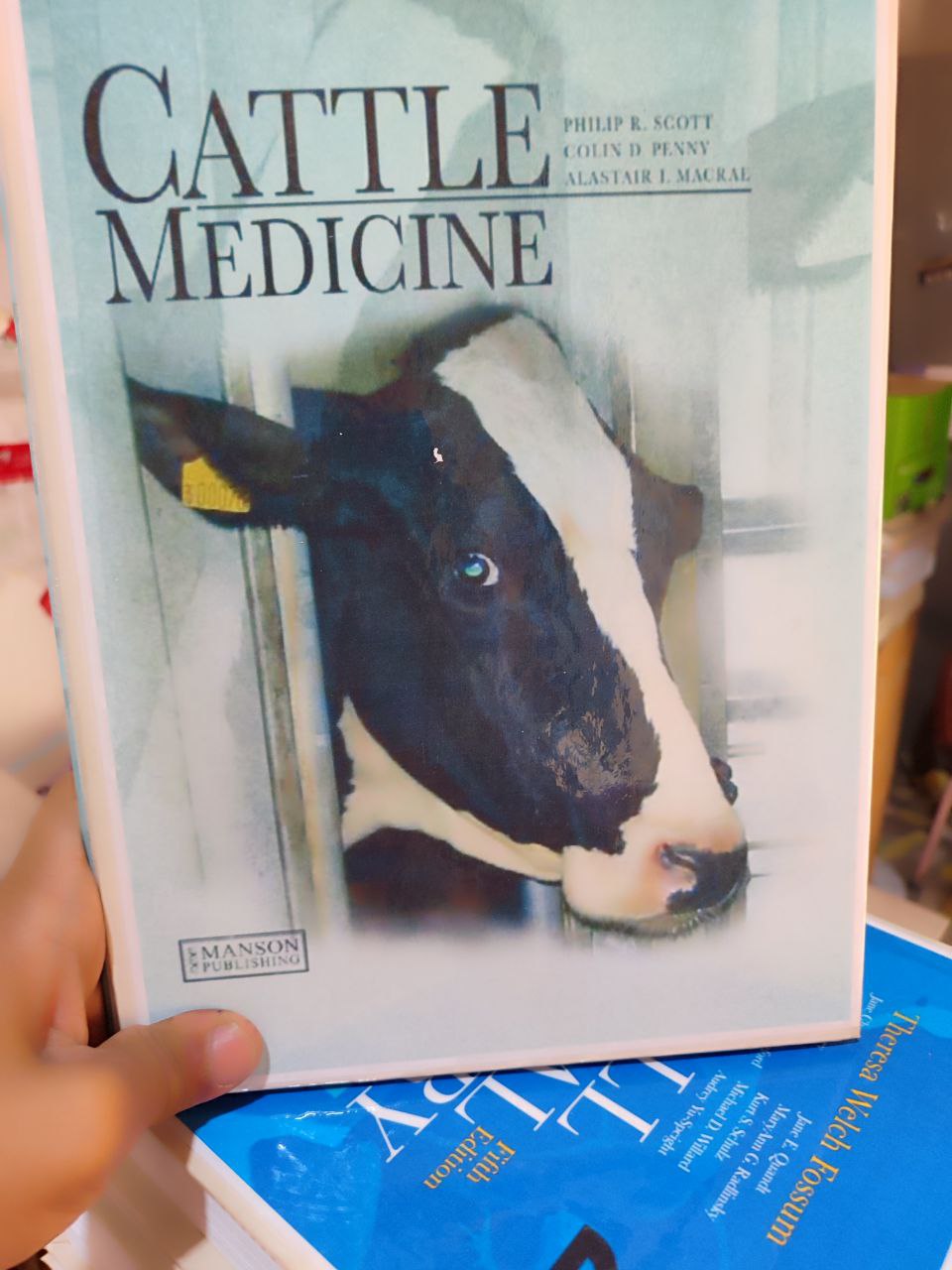
من أفضل المراجع العملية في طب الأبقار، يشرح بطريقة مبسطة وواضحة كيفية التعامل مع الحالات الشائعة في المزارع، مدعوم بصور مميزة تساعد على التشخيص. مناسب للأطباء البيطريين حديثي التخرج أو أي طبيب شغال
افضل و ابسط كتب اللارج هي:
كتاب المرشد البيطري د دربالة
guide to bovine clinics
&
cattle medicine
ثم
المراجع
الشامله مثل
veterinary medicine
&
large animal internal medicine
&
bovine medicine
&
bovine reproduction
&
sheep and goat medicine
&
sheep medicine
&
goat medicine and surgery&Farm animal surgery
&
techniques in large animal surgery
Cattle Medicine, written by Phillip R. Scott, Colin D. Penny, and Alastair Macrae, is a detailed and highly practical guide to the diagnosis and treatment of diseases in cattle. Designed for veterinarians, farm animal practitioners, and veterinary students, the book provides a comprehensive resource that bridges the gap between academic study and clinical practice. By focusing on real-world veterinary situations and combining them with clear explanations, the authors create an accessible text that has become an essential tool in bovine medicine.
A central feature of this book is its exceptional use of high-quality images and illustrations. Unlike many veterinary texts that rely primarily on written descriptions, Cattle Medicine incorporates sequential photographs to show how diseases progress over time. This visual approach allows readers to understand not only the key clinical signs but also how these signs develop, making it easier to identify conditions in practice. The photographs also highlight subtle details that are often difficult to capture in words alone, giving the reader additional confidence when examining cattle in the field.
The structure of the book follows a body system approach, which makes it intuitive for practitioners to locate the information they need. Each section begins with guidance on how to examine the relevant body system, followed by a systematic discussion of the most common and important diseases. The authors present information on etiology, clinical features, differential diagnosis, prognosis, treatment options, and control measures. This format ensures that veterinarians can quickly access practical solutions when dealing with cases in the field, while also deepening their understanding of disease mechanisms.
One of the strengths of Cattle Medicine lies in the combined expertise of its authors. Scott, Penny, and Macrae bring together decades of experience in bovine practice, veterinary teaching, and clinical research. Their perspectives are complementary, blending the day-to-day realities of farm visits with the academic rigor of university hospitals. As a result, the book is both practical and evidence-based, making it equally useful as a study guide for students and as a reference for practicing veterinarians.
The book not only covers individual diseases but also emphasizes broader aspects of cattle health management. It encourages a problem-solving mindset by guiding readers through differential diagnosis and decision-making. Preventive medicine, herd health planning, and sustainable disease control strategies are highlighted throughout the text, reflecting the importance of long-term animal welfare and productivity in modern veterinary practice. By integrating treatment and prevention, the authors provide a balanced framework for managing both individual cases and herd-level challenges.
For veterinary students, Cattle Medicine offers an excellent foundation in bovine clinical practice. It helps them prepare for their clinical years by introducing them to the logical process of examination, diagnosis, and treatment. The clear explanations, combined with the strong visual support, make it easier for students to grasp complex topics. For experienced veterinarians, the book acts as a quick reference in the field, supporting decision-making when faced with challenging cases.
In addition, the text is suitable for educators, serving as a reliable teaching resource for courses in farm animal medicine. The structured layout and visual aids make it ideal for classroom discussions, case-based learning, and practical demonstrations. Its emphasis on clinical reasoning also aligns well with modern veterinary curricula, which prioritize critical thinking and problem-solving skills.